
Contemporary Issues
Professor Wold opened the discussion by addressing the ongoing tension between sustainable development and free trade, two forces that often pull policymakers in different directions. Sustainable development seeks to meet present needs without compromising future generations, but free trade can sometimes prioritize economic growth in ways that threaten environmental health. Navigating this balance requires legal systems that can integrate economic interests with environmental safeguards, a challenge central to international environmental law.
The webinar highlighted several foundational legal principles that guide global environmental governance. The precautionary principle stands out as a key tool: it calls for caution and preventative action when scientific evidence is uncertain but potential risks are significant. This principle shifts the burden toward preventing harm before it happens rather than reacting afterward. Equally important is the polluter-pays principle, which establishes that those responsible for pollution should bear the costs of managing and mitigating its effects. Together, these principles form a moral and legal basis for accountability and proactive stewardship in international agreements.
Influential International Treaties and Organizations
Professor Wold then provided a detailed overview of some of the most influential global treaties in environmental law. These include CITES, the Convention on International Trade in Endangered Species, which regulates cross-border wildlife trade to protect endangered species from exploitation. Another key treaty discussed was the Convention on Biological Diversity (CBD), which focuses on conserving the world’s biological resources, promoting sustainable use, and ensuring fair sharing of benefits derived from genetic resources. These treaties demonstrate how countries collaborate through law to address problems that no single nation can solve alone.
The role of non-governmental organizations (NGOs) and governments in shaping international policy was another crucial focus. NGOs often act as watchdogs, advocates, and experts, helping to push environmental issues onto the global agenda and ensuring treaties are implemented effectively. Governments negotiate the terms of agreements and are responsible for enforcement, but their actions are influenced by scientific findings, public pressure, and diplomatic considerations. This dynamic interplay between NGOs, states, and international institutions makes the field of international environmental law both complex and fascinating.
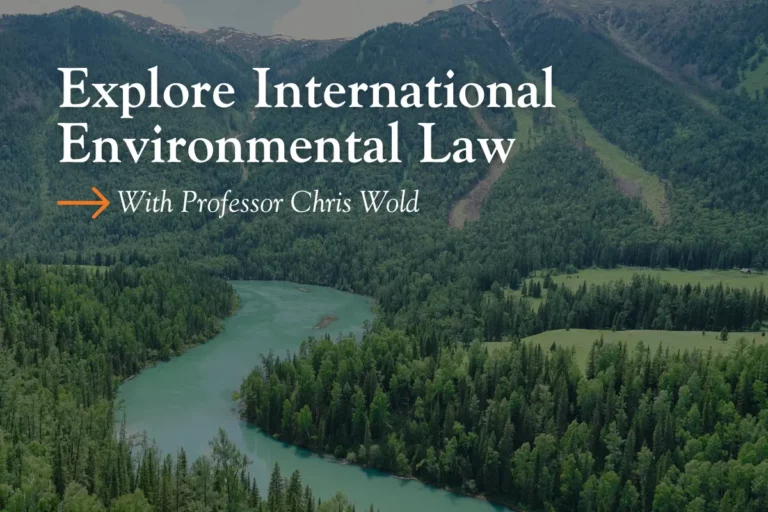
Throughout the webinar, Professor Wold underscored how international environmental law is constantly evolving. New challenges, like marine plastic pollution, climate change, and biodiversity loss, demand innovative legal responses. His course allows students to engage with these cutting-edge issues, studying recent developments and hearing directly from experts active in the field.
Structure and Benefits of Lewis & Clark’s Programs
Beyond the academic content, attendees learned about the structure and benefits of Lewis & Clark’s online Master of Laws (LLM) and Master of Studies in Law (MSL) programs. Both degrees focus on environmental law, with a wide range of courses that cover l topics such as wildlife law, ocean and coastal law, and administrative law. The programs are designed for flexibility, allowing students to start in the fall, spring, or summer, and to pace their coursework to fit their personal and professional lives.
The online learning format at Lewis & Clark is supported by experienced faculty who remain highly accessible, ensuring that distance does not mean isolation. Students have opportunities for mentorship, career advising, and engagement with a vibrant community of peers and alumni worldwide. Although online students do not participate in on-campus clinics, the school offers externship opportunities with leading environmental organizations, which provide practical experience in international environmental work.
Lewis & Clark’s online LLM and MSL programs are proud to offer a comprehensive and flexible pathway for those looking to specialize in environmental law. With expert-led courses covering critical global treaties, legal principles, and the roles of NGOs and governments, coupled with strong faculty support and career services, these programs prepare students to make a meaningful impact in global environmental policy and law. Whether you’re aiming to work in government, NGOs, or the private sector, Lewis & Clark provides the tools and network to help you succeed, no matter where you are in the world.